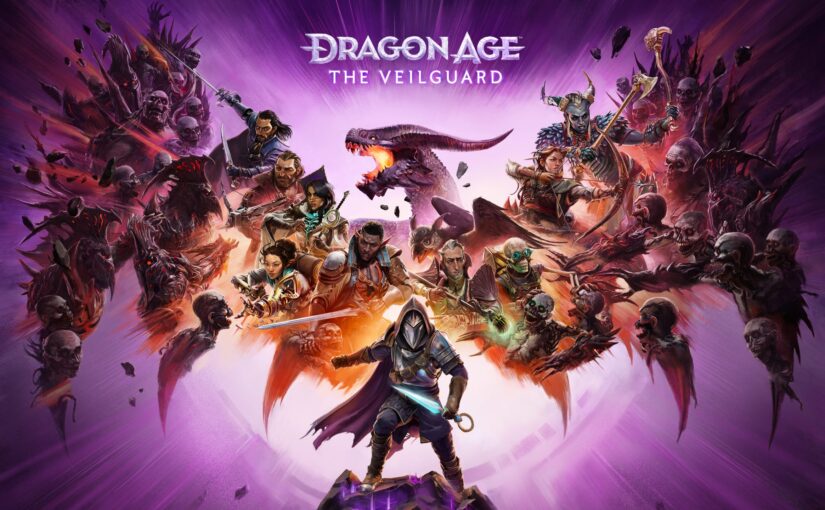
Several years back, when I saw the trailer for this game, I hastily concluded the Dragon Age series was over for me. The characters looked cartoon-like, the presentation hopelessly overstated and melodramatic, Varric had apparently turned into a brunet, and I just wanted nothing to do with any of it. Not even the occasional glimmer of Tumblr enthusiasm on my dash could tempt me. But then a friend talked me into getting the game during the winter sales, and once I started it, I could barely put it down.
Firstly, the characters are not cartoon-like. Well, one is. But by far and large, they’re no more stylized than they were in any of the previous installments. It’s just that the game looks so much worse in screencaps than it does while running? Not sure how or why. Visually, it is absolutely stunning. Vivid and visceral and varied. It instills an awe-inspiring sense of scale that I found immensely satisfying.
But, because I’m shallow, the thing that caught my eye the most readily (and kept pulling it back even after hundreds of hours of playing), is the hair. That’s correct, ladies and gentlemen of the jury: the fucking hair. It’s just so good? It moves so hypnotically? And when paired with the rest of my gray-eyed, platinum blond twink (no, I don’t have a type; what’s wrong with you?), it makes for this orgasmic esthetic experience that I hope to remember forever.
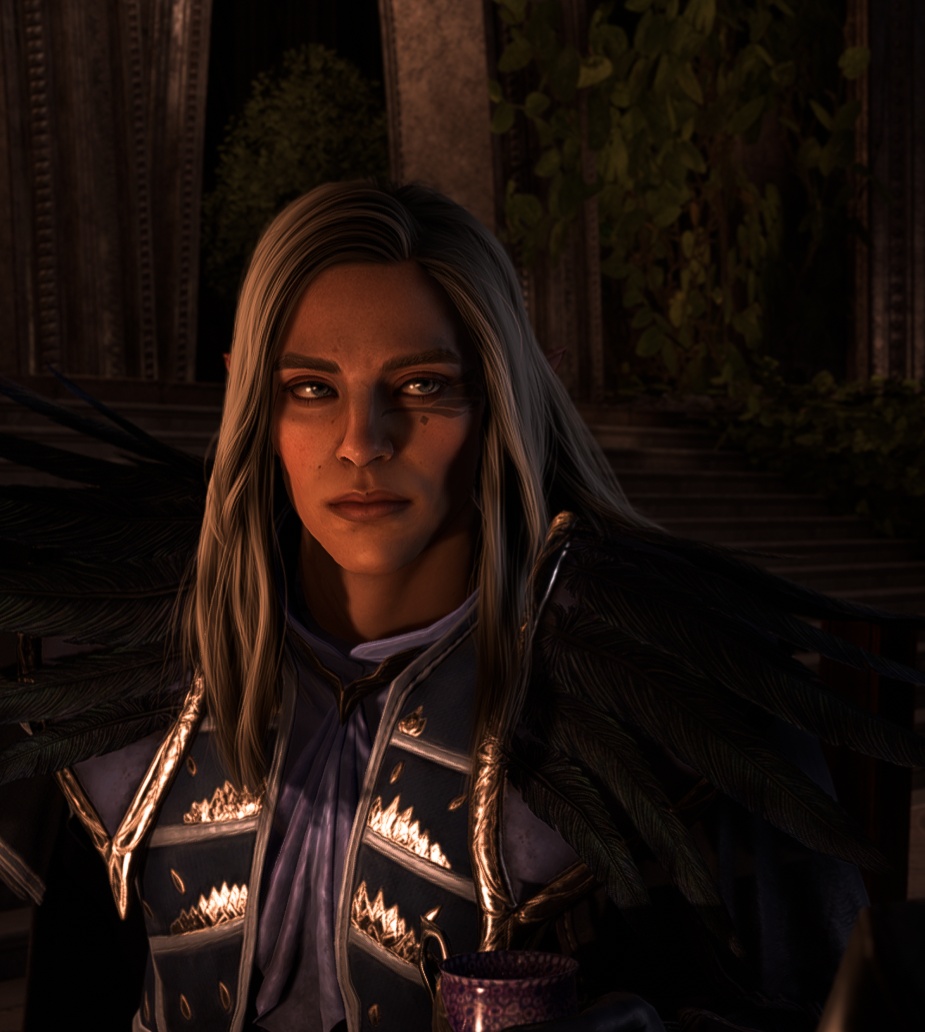
Secondly, despite the opening sequence that was showcased in that trailer and that is, indeed, overstated and melodramatic, the game’s narrative is surprisingly solid. Which isn’t to say it’s anything groundbreaking. Your typical save the world from power-hungry villains affair that I’d wrinkle my nose at if not for our sad reality that’s all too well reflected in these tired tropes these days. What sets DATV apart is the involvement of a trickster character (yes, that one), who managed to surprise me several times with well-executed plot twists, one of which was of seriously epic proportions; the kind that warrants a replay just to witness the setup with the benefit of hindsight.
The narrative is helped along by great acting. I’m the most enamored with the voices of my Rook and of Solas (shocking, I know), and the least with those of the villains (not even great acting can salvage pedestrian writing). In between, I especially enjoyed the voices of Taash and Emmrich.
I have a bit of a tale to tell, regarding Emmrich. He’s the cartoon-like character. Not only in appearance, but also thanks to the unfortunate choices made around his background and the mandatory obstacle you must help him overcome to unlock his full potential. But I ended up liking him anyway. In part, because of his speech patterns and gestures, which made my gaydar twitch with anticipation. But also because he made me think of Draco. I could see an aged Draco in him with startling clarity: someone gentle, privileged, cowardly; someone burdened with vague regrets. I thought the association was mostly due to Emmrich’s overwhelming Britishness, from the accent to the butler with the tea. But then the Hand of Glory made an appearance in his personal quest line—and Draco has one too! Likely a coincidence, but it made me squeal with delight.
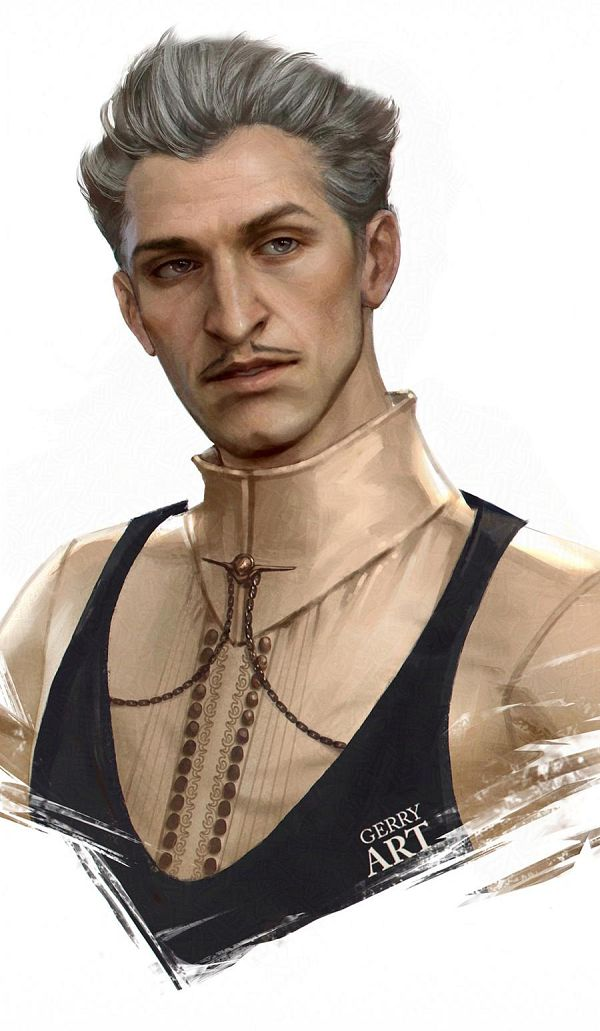
See what I mean?
Anyway. Another commendable thing about the narrative is that it managed to tie a great many loose ends, lore-wise, on top of introducing new ideas. I loved the Regrets of the Dreadwolf quest series, because it does so much lore and character development in such a short screentime.
My impression was that most of the screentime was spent in dialogs and cutscenes, followed by exploration, with combat at the bottom. Which I weirdly regret a little? I enjoyed the combat so much. It’s not every day I say this! I was inspired to excel at it, and turned up the difficulty as much as I could along the way, reveling in my damage numbers, timely dodges and even the occasional, well-placed parry. I played a mage, and mostly used the staff at first, but then I discovered the allure of mage melee and never looked back.
DATV has huge skill trees that you can’t possibly explore within a single playthrough, and it looks like it’s well-balanced in the sense that all three archetype classes are equally satisfying to play. Apparel, weapons, inventory, crafting and the economy are all quite basic, but plentiful and diverse in just the right proportion to give the impression of almost limitless options while never becoming overwhelming.
The exploration was probably the most shockingly engaging element of the game, what with the abysmal expectations I brought from the tedium of Inquisition. I had so much fun solving the environment puzzles and discovering secret locations that I was genuinely sad to find, on second playthrough, that I memorized most of them well enough to no longer feel challenged.
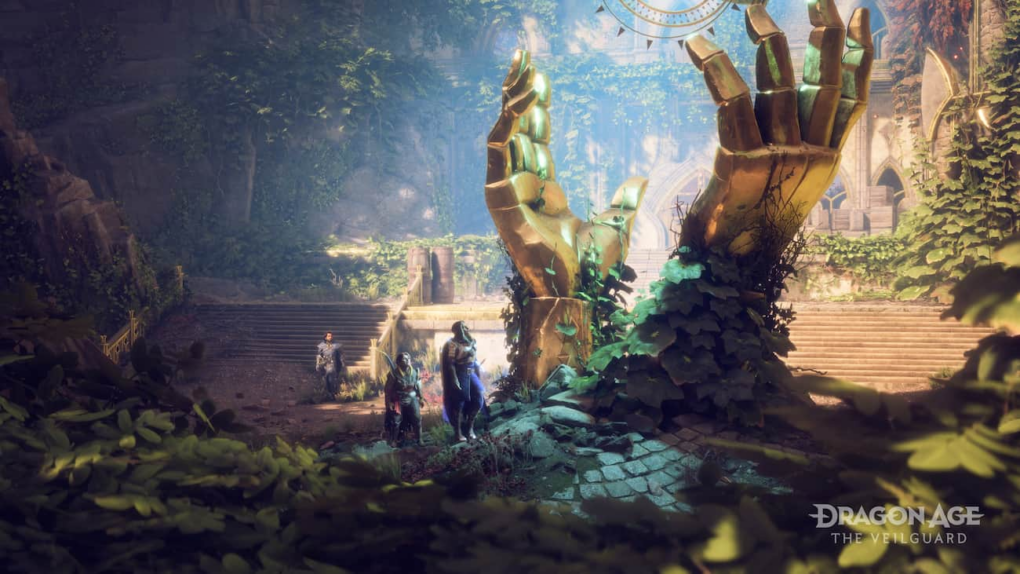
This is what makes for an exceptional experience: when all the elements hover between fine and excellent and nothing is bad enough to annoy. For example, The Witcher 3, which had a much stronger story and writing in general, more challenging and refined combat, and incomparably larger world to explore, suffered from too many random encounters that made even the simplest, most straightforward quests a chore, and took the enjoyment out of the exploration. The 100 hours it took me to finish it felt like 300. Whereas with DATV, the first 100 hours felt like 30.
Immediately after finishing the first playthrough, I started another (with a rogue who looks exactly the same as the mage and obviously has the same hair), but I slowly tapered out of it and didn’t finish. One thing DATV does not have is replayability. There’s one choice in the first half of the game that affects some characters and some areas of the game dramatically, but otherwise, not much room to do things differently. Especially when, like me, you tend to fall in love with your toon and just want to play him again in the exact same way.
All in all, I loved it, your honor, and I will probably play it again.